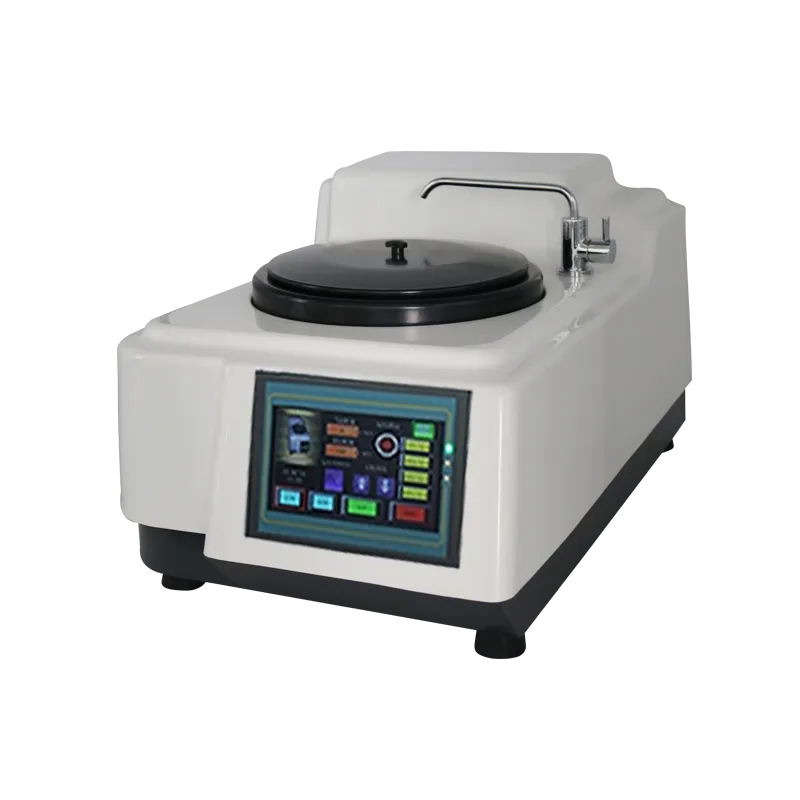
In the landscape of advanced manufacturing and metallurgical research, precision measurement tools form the backbone of quality control and material characterization. The 7MHVS-1000A Micro Vickers Hardness Tester, developed by Laizhou Jincheng Industrial Equipment Co., Ltd., exemplifies cutting-edge instrumentation by integrating superior optical design with intelligent touch technology. This article delves into the device’s core technological attributes, demonstrating how it meets stringent international standards such as ISO 6507 and ASTM E384 — essential benchmarks for hardness testing accuracy and reproducibility.
The 7MHVS-1000A is equipped with a high-definition optical system featuring a multi-element objective lens assembly and LED coaxial illumination that optimizes contrast and clarity. These advancements allow for precise observation of indentations as small as 10 micrometers, critical for micro-scale hardness assessments especially in components within electronics and aerospace sectors.
Accurate image capture and measurement are facilitated through a digital imaging system with up to 5-megapixel resolution, coupled with software algorithms that analyze indentation diagonals with a measurement error meticulously controlled within ±0.5%. This margin is well below industry tolerance, thereby ensuring consistent reliability across repeated tests.
A hallmark of the 7MHVS-1000A is its responsive 7-inch capacitive touch screen that presents an intuitive human-machine interface (HMI). Operators can easily navigate pre-programmed test parameters — including preset test forces ranging from 0.1 to 1000 gf, dwell times adjustable between 5 and 30 seconds, and customizable LED light intensity levels — ensuring flexibility to cater to diverse material properties and testing protocols.
Supporting a multilingual environment, the interface aids cross-border laboratories and multinational production sites in maintaining consistent operational standards, making the device highly accessible in global markets.
The instrument’s design rigorously adheres to ISO 6507 and ASTM E384, the authoritative international standards governing microhardness testing methodologies. Compliance with these standards safeguards not only accuracy but also procedural repeatability, which is vital for scientific research and advanced quality assurance.
Regular calibration and verification are eased by integrated reference blocks and automated software prompts, helping maintain long-term stability of measurement results with certified traceability.
The versatility of the 7MHVS-1000A transcends multiple high-end manufacturing sectors. In metallurgical laboratories, it plays a pivotal role in characterizing microstructures and phase distributions by hardness variation, helping researchers validate alloy development and heat-treatment processes.
Within mechanical machining industries, this model supports rigorous hardness verification of cutting tools, bearings, and precision components to ascertain durability and wear resistance—parameters that directly influence product lifecycle and safety standards.
Additionally, the tester’s capability to accurately assess the hardness of miniature electronic components fuels innovation in semiconductor and microelectromechanical systems (MEMS), where material properties at micro and nano scales are critical.
Ensuring operational continuity, Laizhou Jincheng Industrial Equipment offers comprehensive after-sales support, including worldwide supply of original spare parts, remote diagnostics, and regular software upgrades. Such robust service infrastructure assures users of low downtime and maximized return on investment.
The origination of parts from certified vendors, paired with stringent incoming quality control, underpins the durability and reliable performance of the 7MHVS-1000A in challenging industrial environments.
Supporting data-driven decisions, the device’s software generates detailed reports with graphical hardness distribution maps and statistical analysis, facilitating comprehensive interpretation by engineers and scientists. These insights enable the optimization of manufacturing parameters and materials selection grounded in concrete empirical evidence.
Examples include case studies where aerospace component failure rates were reduced by 15% due to early detection of hardness inconsistencies using the 7MHVS-1000A, showcasing tangible impact on product quality improvement.

Figure 1: Optical System and Touch Interface Details of the 7MHVS-1000A
 201
|
201
|
 manual dual-disc metallographic polisher
LCD interface variable speed control
fiberglass equipment durability
metallographic polishing maintenance
after-sales service customer cases
314
|
metal sample grinder polisher
metallographic analysis improvement
intelligent grinding equipment
stepless speed control
ASTM ISO compliant polishing machine
489
|
hardness tester selection guide
Rockwell hardness test parameter settings
automatic load control hardness tester
metallographic inspection equipment
material hardness testing standards
manual dual-disc metallographic polisher
LCD interface variable speed control
fiberglass equipment durability
metallographic polishing maintenance
after-sales service customer cases
314
|
metal sample grinder polisher
metallographic analysis improvement
intelligent grinding equipment
stepless speed control
ASTM ISO compliant polishing machine
489
|
hardness tester selection guide
Rockwell hardness test parameter settings
automatic load control hardness tester
metallographic inspection equipment
material hardness testing standards